
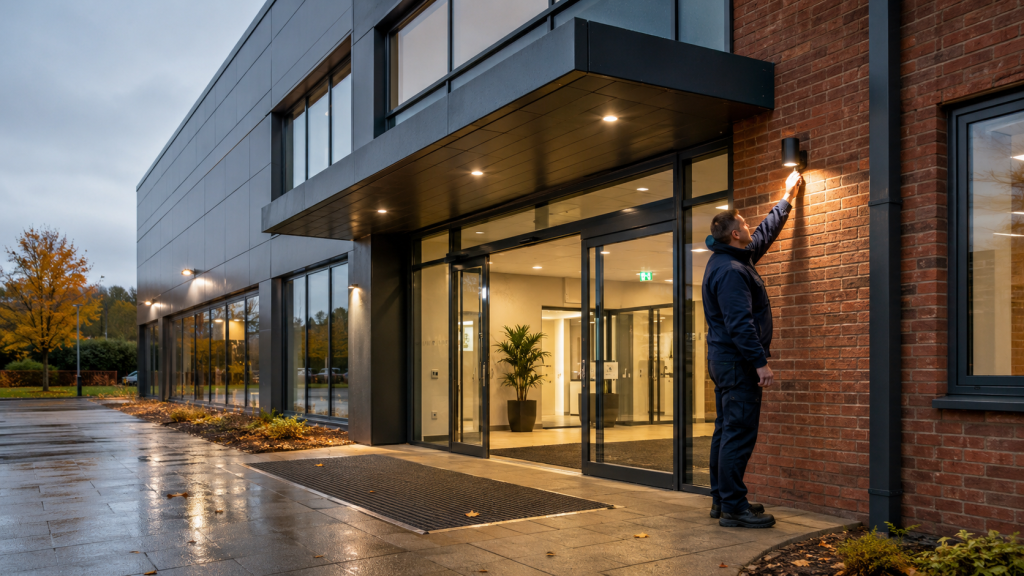
As summer draws to a close, now is the ideal time for businesses and commercial landlords to prepare their premises for the colder, darker and wetter months ahead.
Autumn and winter place additional demands on commercial buildings. Lighting is used for longer, entrances become wet and slippery, electrical systems work harder and minor defects can quickly develop into disruptive and expensive problems.
Carrying out a few essential checks now can help protect your employees, visitors and property while reducing the likelihood of emergency repairs later in the year.
Check Your Internal and External Lighting
Shorter days mean that staff and customers will increasingly arrive and leave in darkness. Faulty, inadequate or poorly positioned lighting can make entrances, car parks, corridors and stairways more difficult to navigate safely.
Check that all internal and external lights are operating correctly, paying particular attention to:
- entrances and exits;
- car parks and pedestrian routes;
- loading and delivery areas;
- stairs and changes in floor level;
- corridors and communal areas; and
- security-sensitive parts of the building.
Older fluorescent lighting may also be expensive to operate and require frequent maintenance. Replacing it with modern LED lighting can reduce electricity consumption, improve visibility and lower ongoing maintenance requirements.
Test Your Emergency Lighting
Emergency lighting is designed to operate when the normal power supply fails, allowing people to leave the building safely.
It is especially important during autumn and winter, when power failures or electrical faults may leave parts of a commercial property completely dark.
Emergency lights should be tested regularly, with the results recorded. Damaged fittings, failed batteries and missing or poorly illuminated exit signs should be dealt with promptly.
If you are unsure whether your emergency lighting is adequate, a qualified commercial electrician can inspect the system and identify any areas requiring attention.
Inspect Entrances and Commercial Flooring
Wet leaves, rainwater, mud and eventually ice can make entrances and walkways hazardous. The Health and Safety Executive warns that colder weather and darker evenings can increase the risk of workplace slips, trips and falls.
Inspect entrance flooring, matting, corridors and other high-traffic areas for:
- loose or lifting floor coverings;
- worn or damaged surfaces;
- ineffective entrance matting;
- changes in floor level;
- areas where water regularly collects; and
- insufficient grip in wet conditions.
Commercial flooring must be suitable for the amount and type of traffic it receives. Replacing damaged or unsuitable flooring before the worst weather arrives can improve safety, appearance and durability.
Review Your Electrical Installation
Businesses often use more electrical equipment during the colder months. Lighting remains switched on for longer, while portable heaters and other seasonal equipment may be introduced.
This additional demand can expose weaknesses in an older or poorly maintained electrical installation. Warning signs can include:
- circuit breakers regularly tripping;
- flickering lights;
- damaged sockets or switches;
- scorch marks or unusual smells;
- overloaded extension leads; and
- equipment becoming unusually hot.
These signs should never be ignored. A commercial electrician can inspect the affected circuits and determine whether repairs, alterations or more comprehensive fixed-wire testing are required.
Employees should also be discouraged from connecting several high-powered appliances to the same extension lead. Portable heaters, in particular, can place a substantial load on circuits that may not have been designed for them.
Look for Draughts, Damage and Water Ingress
Before persistent rain and colder winds arrive, inspect doors, windows, ceilings and internal walls for signs of damage.
Draughts around doors and windows can make working areas uncomfortable and increase energy consumption. Staining, peeling paint, damp patches or discoloured ceiling tiles may indicate water ingress that needs further investigation.
Minor defects are generally easier and less expensive to address when they are found early. If water reaches electrical fittings, flooring or decorated surfaces, a relatively small problem can quickly affect several parts of the building.
Make Sure Workspaces Remain Comfortable
Employers are required to provide a reasonable indoor working temperature. Health and Safety Executive guidance suggests that indoor workplaces should normally be at least 16°C, or 13°C where work involves rigorous physical effort.
Temperature is not the only consideration. Draughts, poor ventilation, cold floors and uneven heating can all affect how comfortable a workplace feels.
Inspecting the premises before colder weather arrives gives you time to identify physical improvements that may help, such as repairing doors, adjusting layouts, replacing damaged flooring or altering partitions to make better use of the available space.
Complete Outstanding Fit-Out and Refurbishment Work
Autumn is also a good opportunity to complete refurbishment work before the busy Christmas period or the start of a new year.
A commercial fit-out can address practical problems as well as improving appearance. It may provide:
- a more efficient layout;
- improved lighting and electrical provision;
- safer and more durable flooring;
- better use of underused areas;
- improved customer-facing spaces; and
- a more comfortable environment for employees.
Planning the work early also allows it to be scheduled around your quieter periods, helping to minimise disruption to normal operations.
Create a Seasonal Maintenance Plan
A written maintenance plan makes it less likely that important checks will be missed. It should identify what needs inspecting, who is responsible and how frequently each check should be completed.
Your autumn and winter plan might include:
- lighting and emergency-lighting tests;
- electrical inspections;
- flooring and entrance checks;
- clearing leaves from pedestrian routes;
- arrangements for ice and snow;
- checking for leaks after heavy rain; and
- reporting and recording defects.
Keep records of inspections, maintenance visits and completed repairs. These records can demonstrate that the property is being managed responsibly and help you spot recurring problems.
Prepare Now, Rather Than Waiting for a Breakdown
Waiting until something fails often results in higher repair costs, more disruption and less choice over when work is carried out.
A planned inspection in early autumn gives businesses and landlords time to correct faults before harsher weather places additional pressure on the building.
AFM Services provides commercial electrical services, flooring and fit-out solutions for businesses, landlords and property managers throughout Essex, London and the surrounding areas.
If you would like help preparing your commercial premises for autumn and winter, contact AFM Services on 01277 549082 or email info@afmservicesltd.co.uk to discuss your requirements.