
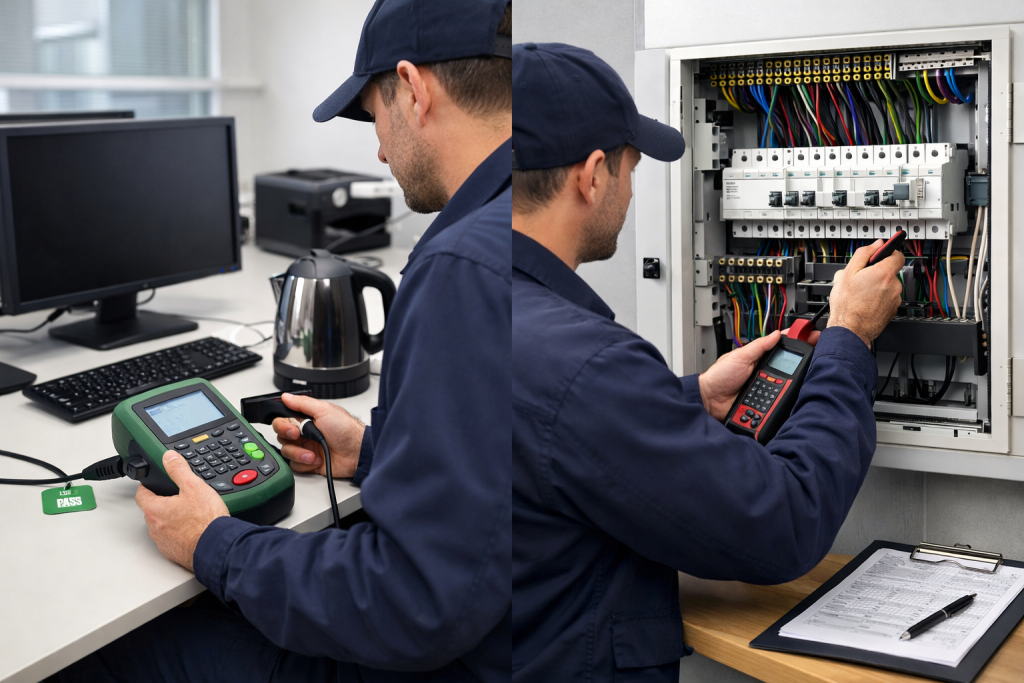
Electrical safety is a legal responsibility for business owners and landlords, but the different types of testing can be confusing. Two of the most common checks carried out in commercial premises are PAT testing and fixed wire testing. While both are essential for safety and compliance, they cover very different parts of your electrical system.
Understanding the difference helps ensure your business meets its obligations and avoids unnecessary risks.
What Is PAT Testing?
PAT testing, or Portable Appliance Testing, focuses on electrical equipment that can be plugged in and moved. This includes items such as computers, monitors, kettles, printers, extension leads and power tools.
The purpose of PAT testing is to check that appliances are safe to use and do not present a risk of electric shock or fire. A qualified electrician or competent tester will visually inspect the item and carry out electrical tests using specialist equipment. Each appliance is then labelled to show whether it has passed or failed.
PAT testing is not legally required by name, but it is one of the recognised ways to meet the Electricity at Work Regulations 1989. Most businesses carry out PAT testing annually, although high-risk environments may need it more frequently.
What Is Fixed Wire Testing?
Fixed wire testing, also known as an Electrical Installation Condition Report or EICR, covers the permanent electrical installation within a building. This includes wiring hidden behind walls, sockets, lighting circuits, distribution boards and fixed equipment.
Unlike PAT testing, fixed wire testing assesses the overall condition of the building’s electrical system. It identifies wear and tear, deterioration, overloading and non-compliance with current wiring regulations. The result is a formal report that confirms whether the installation is safe or if remedial work is required.
For most commercial premises, fixed wire testing is required every five years, although higher-risk environments may need more frequent inspections.
Key Differences Between PAT and Fixed Wire Testing
PAT testing checks individual appliances that staff use every day. Fixed wire testing examines the core electrical infrastructure of the building. PAT testing is usually quicker and carried out more often, while fixed wire testing is more detailed and takes longer to complete.
Both tests are important. PAT testing reduces the risk of faults in portable equipment, while fixed wire testing ensures the building itself remains electrically safe and compliant.
Why Your Business Needs Both
Relying on just one type of testing leaves gaps in your electrical safety strategy. A building can have safe appliances but unsafe wiring, or compliant wiring but faulty equipment. Using both PAT testing and fixed wire testing provides full coverage and demonstrates that you are taking electrical safety seriously.
At AFM Services Ltd, we provide complete electrical services for commercial premises, including PAT testing, fixed wire testing and certification. This ensures your business remains compliant, safe and fully documented.
Stay Safe and Compliant
Understanding the difference between PAT testing and fixed wire testing makes it easier to plan inspections and avoid compliance issues. Regular testing protects your staff, your property and your reputation, while giving you peace of mind that your electrical systems are safe.